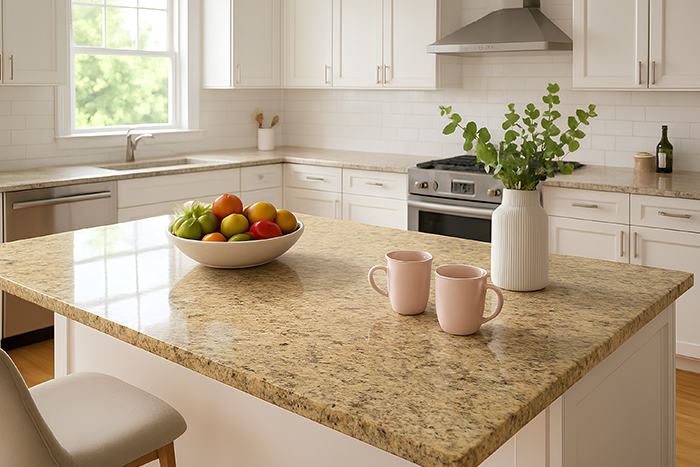
Create a stunning kitchen with the right countertop design. Explore how materials, colors, patterns, and finishes can complement your cabinetry, enhance functionality, and bring your overall kitchen design countertop vision to life with style and lasting appeal.
Walk into any kitchen showroom in 2026, and you’ll notice something has shifted. The glossy, mirror-bright countertops that dominated design boards for the last two decades are sharing floor space with matte, textured surfaces that feel almost alive under your hand. This isn’t a passing trend. It’s a fundamental rethink of how stone finish shapes the emotional experience of a kitchen, not just its visual style.
Choosing between leathered, honed, and polished finishes used to be a footnote in the design process. Today, it’s one of the first decisions homeowners, architects, and contractors make, because the finish determines everything from maintenance routines to how light bounces around a room. Consequently, understanding these three finishes isn’t optional anymore for anyone serious about kitchen design.
This guide breaks down what each finish actually does, who it’s best suited for, and why 2026 is the year stone texture became a design language of its own.
What Each Finish Actually Does to Stone
Every stone finish starts with the same raw slab, yet the surface treatment transforms both function and feel entirely.
- Polished Finishes:
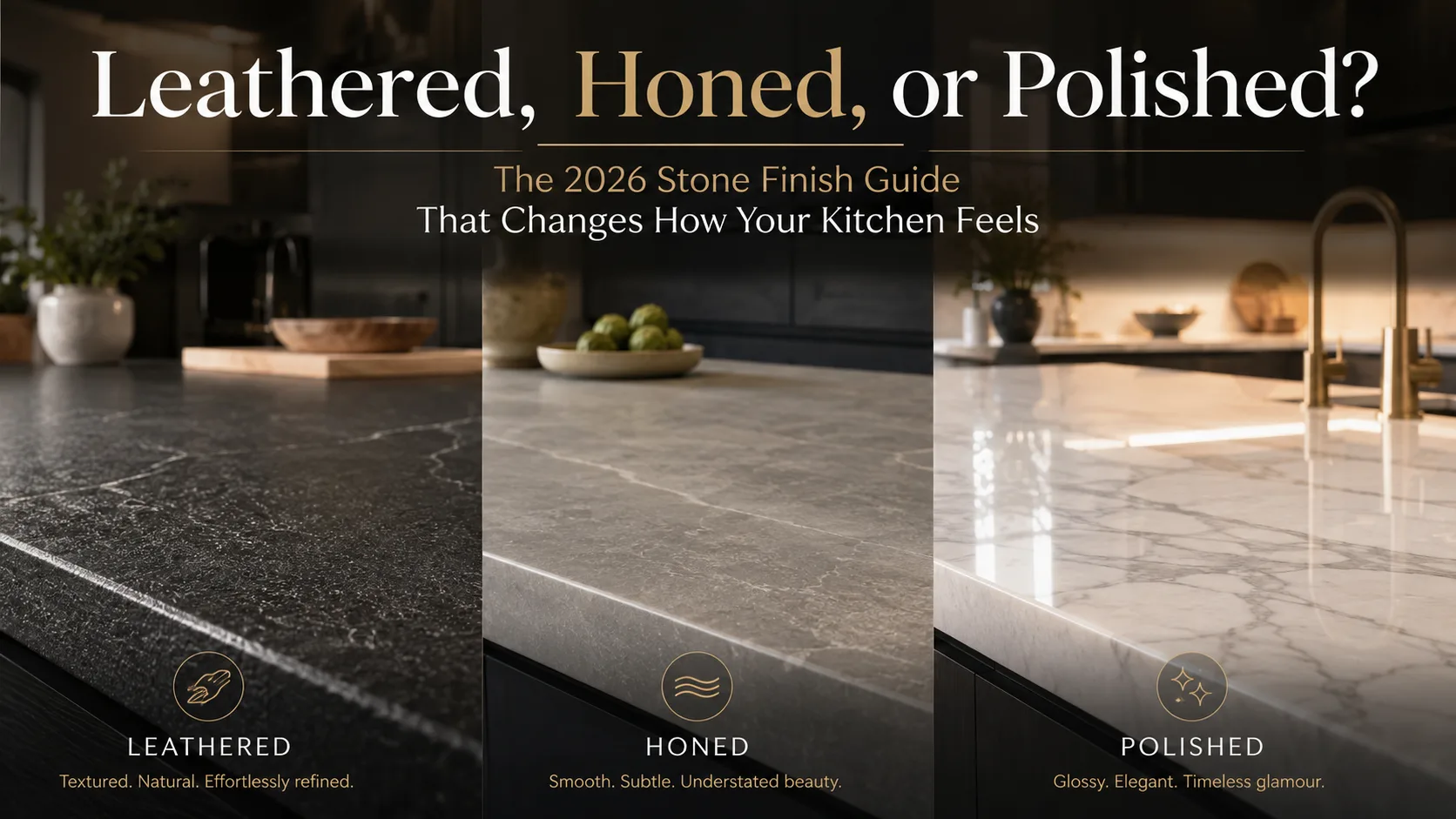
Use fine abrasives to create a glass-like, reflective surface. This is the traditional choice for marble and granite countertops, and it remains popular for good reason: polishing deepens color saturation and makes veining pop dramatically. However, polished surfaces also show fingerprints, water spots, and etching far more readily than other finishes.
- Honed Finishes:
Skip the final buffing stage, leaving a smooth, matte surface with a soft, satin-like touch. Honing typically reduces surface sheen by 60-80% compared to polishing, which is why designers increasingly specify it for high-traffic kitchens where a low-glare, understated look is the goal. Honed stone also tends to hide scratches and light etching better, since there’s no high-gloss surface to reveal imperfections.
- Leathered Finishes:
Are the newest mainstream option, created using diamond-tipped brushes that add subtle texture and dimension without fully matte flatness. The result is a surface with gentle peaks and valleys that catch light unpredictably, giving the stone a tactile, almost topographic quality. Leathering is particularly effective on darker stones like soapstone and honed granite, where it enhances depth without sacrificing durability.
Kitchen Design Countertop Ideas to Elevate Your Space
Elevate your kitchen with thoughtfully selected countertops that balance style, durability, and functionality. Explore colors, patterns, and materials that complement your cabinetry while creating a stunning focal point.
Why 2026 Buyers Are Choosing Texture Over Shine
Market data tells a clear story. According to recent surveys from the National Kitchen and Bath Association, matte and textured countertop finishes have grown from a niche request to nearly a third of new kitchen specifications over the past three years. Homeowners increasingly associate high-gloss surfaces with formality and maintenance stress, while textured finishes read as warmer and more forgiving.
Furthermore, the rise of tactile design across interiors—think bouclé upholstery, raw plaster walls, and unlacquered brass—has created a cultural appetite for surfaces that invite touch. Kitchens are no longer just functional workspaces; they’re the primary gathering space in most homes, and buyers want that space to feel approachable rather than showroom-sterile.
Key takeaways driving this shift:
- Textured finishes photograph beautifully in natural light, which matters enormously for social media and resale marketing
- Matte surfaces reduce visible smudging in households with children or frequent entertaining
- Leathered stone provides grip advantage near wet zones like sinks and prep areas
Matching Finish to Function: A Practical Framework
Selecting a finish shouldn’t be an aesthetic decision alone. It requires weighing the room’s use pattern against each surface’s real-world performance.
For primary cooking zones, honed or leathered finishes generally outperform polished stone. Acidic spills from citrus, wine, or tomatoes etch polished marble almost instantly, leaving dull spots that are difficult to reverse. Meanwhile, honed and leathered surfaces already have a matte quality, so minor etching blends in rather than standing out.
For islands and display areas where the countertop functions as a visual centerpiece, polished finishes still hold an edge. The reflective surface amplifies natural veining and creates the dramatic focal point many open-concept kitchens are designed around. Therefore, a hybrid approach—honed perimeter counters paired with a polished island—has become one of the most requested configurations among interior designers this year.
For commercial kitchens and rental properties, contractors should prioritize durability and low-maintenance finishes. Leathered granite and quartzite resist visible wear far better under high-turnover conditions, reducing the frequency of professional resealing and refinishing calls.
The Cost and Maintenance Reality Nobody Mentions Upfront
Retailers and distributors know a truth that often gets lost in showroom conversations: finish choice significantly affects long-term cost of ownership, not just the initial slab price.
Polished stone typically requires resealing every 6-12 months to maintain its water and stain resistance, since the smooth surface has fewer natural imperfections to trap sealant. Honed and leathered finishes, by contrast, often need sealing only once every 12-18 months because their textured surfaces absorb and retain sealant more effectively.
Cost considerations worth discussing with clients:
- Leathered finishing typically adds 10-20% to fabrication cost due to specialized diamond-brush equipment
- Honed finishes are usually cost-neutral compared to polishing, making them an easy upsell for budget-conscious renovators
- Long-term maintenance savings on textured finishes can offset the higher upfront leathering cost within 3-5 years
Specialty decorators should also note that leathered and honed stones pair exceptionally well with matte cabinetry and brushed metal hardware, creating a cohesive tonal palette without needing multiple statement materials.
Bringing It Together: A Story from the Field
Consider a recent renovation project in a mid-century home where the original design called for polished Calacatta marble throughout. After consulting with the homeowners about their daily habits—two young children, frequent baking, minimal patience for maintenance—the design team pivoted to a honed finish on the main counters and reserved polished marble exclusively for a small bar backsplash.
The result: a kitchen that photographed just as strikingly as the original polished vision, but performed dramatically better under real family use. Six months post-installation, the homeowners reported zero visible etching and significantly less time spent wiping down surfaces. This kind of outcome illustrates exactly why finish selection deserves the same weight as material selection itself.
Your Next Step
The right stone finish isn’t a static rulebook; it’s a conversation between lifestyle, light, and long-term maintenance tolerance. Whether you’re a homeowner planning a renovation, a designer specifying materials for a client, or a contractor sourcing slabs for a development project, the finish you choose will shape how that kitchen feels every single day for years to come.
Before your next stone selection, ask three questions: How will this space actually be used? How much maintenance time can the client realistically commit to? And does the finish support the lighting and layout of the room, not just the countertop itself?
Ready to specify your next project with confidence? Reach out to Granite Granite Inc. to request finish samples in your actual lighting conditions—because no photograph fully captures how leathered, honed, or polished stone feels until it’s in your hands.
Frequently Asked Questions
- What’s the main difference between leathered, honed, and polished stone finishes?
Polished finishes use fine abrasives for a glass-like, reflective surface that deepens color and makes veining pop, but shows fingerprints and water spots easily. Honed finishes skip the final buffing step, leaving a smooth, matte, low-glare surface that hides scratches and light etching. Leathered finishes use diamond-tipped brushes to create subtle texture with peaks and valleys, giving stone a tactile, almost topographic feel.
- Why are homeowners choosing textured finishes over polished ones in 2026?
Textured and matte finishes have grown from a niche request to nearly a third of new kitchen specifications over the past three years. Buyers increasingly associate high-gloss surfaces with formality and maintenance stress, while textured finishes feel warmer, more forgiving, and better suited to kitchens as everyday gathering spaces rather than showroom displays.
- Which finish is best for a kitchen with kids or heavy cooking use?
Honed or leathered finishes generally outperform polished stone in primary cooking zones. Acidic spills from citrus, wine, or tomatoes etch polished marble almost instantly, while honed and leathered surfaces already have a matte quality that lets minor etching blend in rather than stand out.
- Is polished stone ever still a good choice?
Yes for islands and display areas where the countertop acts as a visual centerpiece, polished finishes still have an edge because the reflective surface amplifies veining and creates a dramatic focal point. Many designers now recommend a hybrid approach: honed perimeter counters paired with a polished island.
- Does a leathered finish cost more than polished or honed stone?
Leathered finishing typically adds 10-20% to fabrication cost because of the specialized diamond-brush equipment involved. Honed finishes, on the other hand, are usually cost-neutral compared to polishing, making them an easy upsell for budget-conscious renovations.
- How does maintenance differ between the three finishes?
Polished stone typically needs resealing every 6-12 months since its smooth surface has fewer imperfections to hold sealant. Honed and leathered finishes usually only need sealing every 12-18 months because their textured surfaces absorb and retain sealant more effectively — and long-term savings can offset leathering’s higher upfront cost within 3-5 years.
- What’s the best finish for commercial kitchens or rental properties?
Leathered granite and quartzite are recommended for high-turnover environments because they resist visible wear better and reduce how often professional resealing or refinishing is needed.
- Which stones work best with a leathered finish?
Leathering is particularly effective on darker stones like soapstone and honed granite, where the added texture enhances depth without compromising durability.
- What should I ask before choosing a stone finish for my project?
Consider three questions: How will the space actually be used? How much maintenance time can you realistically commit to? And does the finish support the room’s lighting and layout, not just the countertop itself? The right finish should reflect lifestyle and long-term upkeep, not just aesthetics.